Královničky | Jakub Jahn
Prague City Gallery
16.4. - 10.5.2026
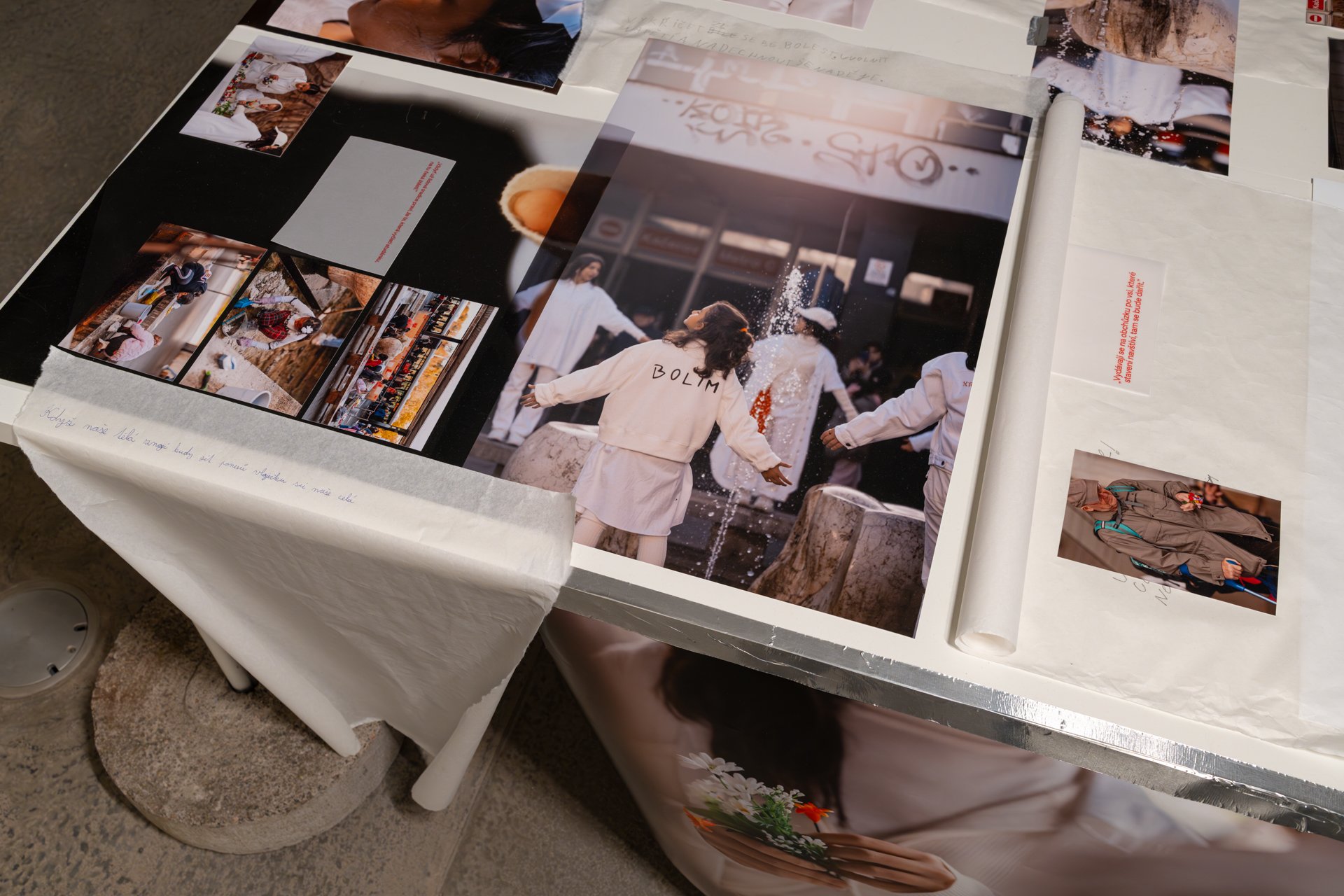
The exhibition KRÁLOVNIČKY (THE MAY QUEENS) follows up on the eponymous happening, based on a reinterpretation of the folk tradition of the opening of wells. The structure of this ritual is rooted in the symbolic act of transition between the winter season and the spring restoration cycle. Within the project, this archetypal model undergoes a deliberate process of decontextualization within the setting of urban infrastructure, specifically on the underground line, typologically defined as a transit zone, functionally determined, and traditionally burdened by visual and social decay.
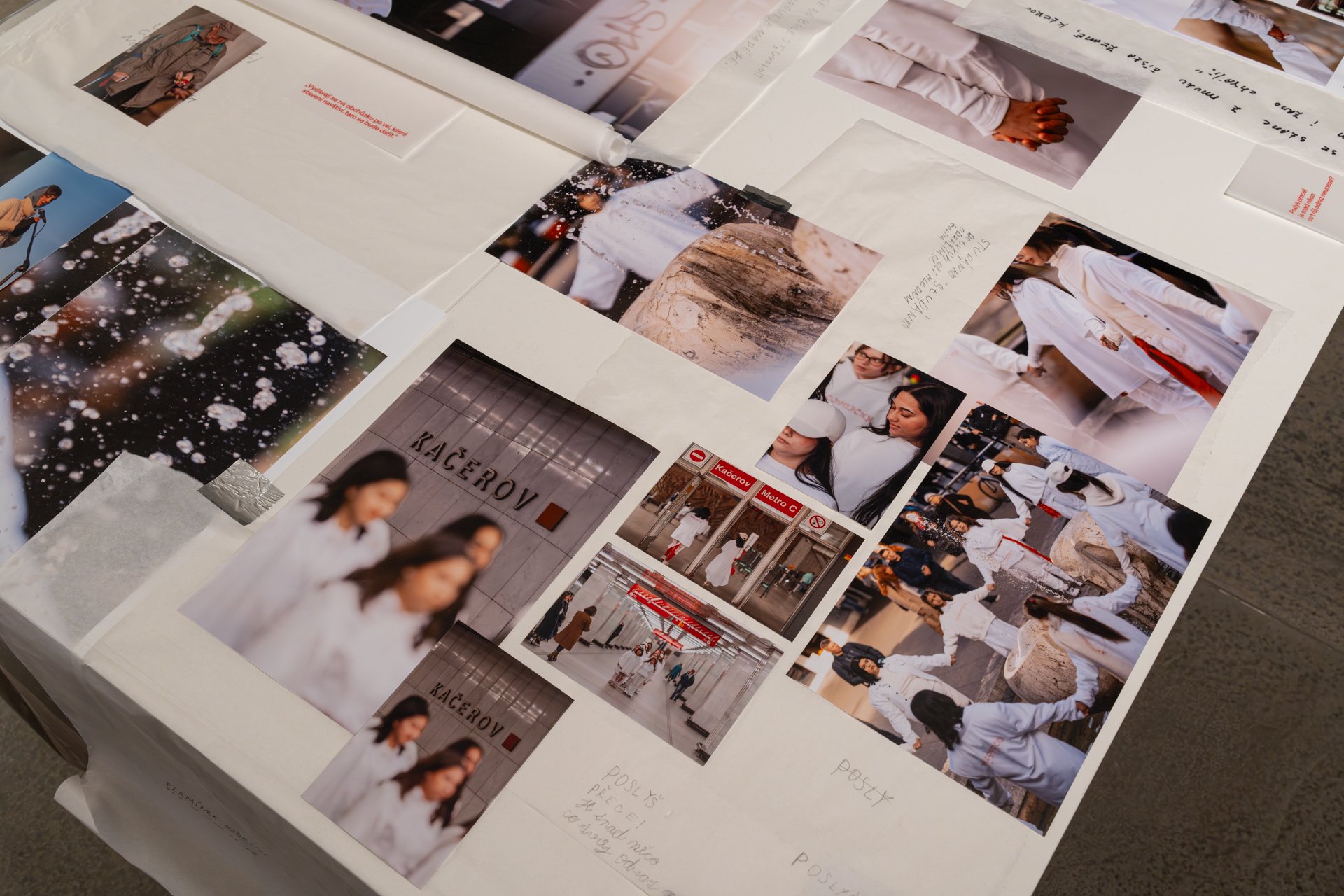
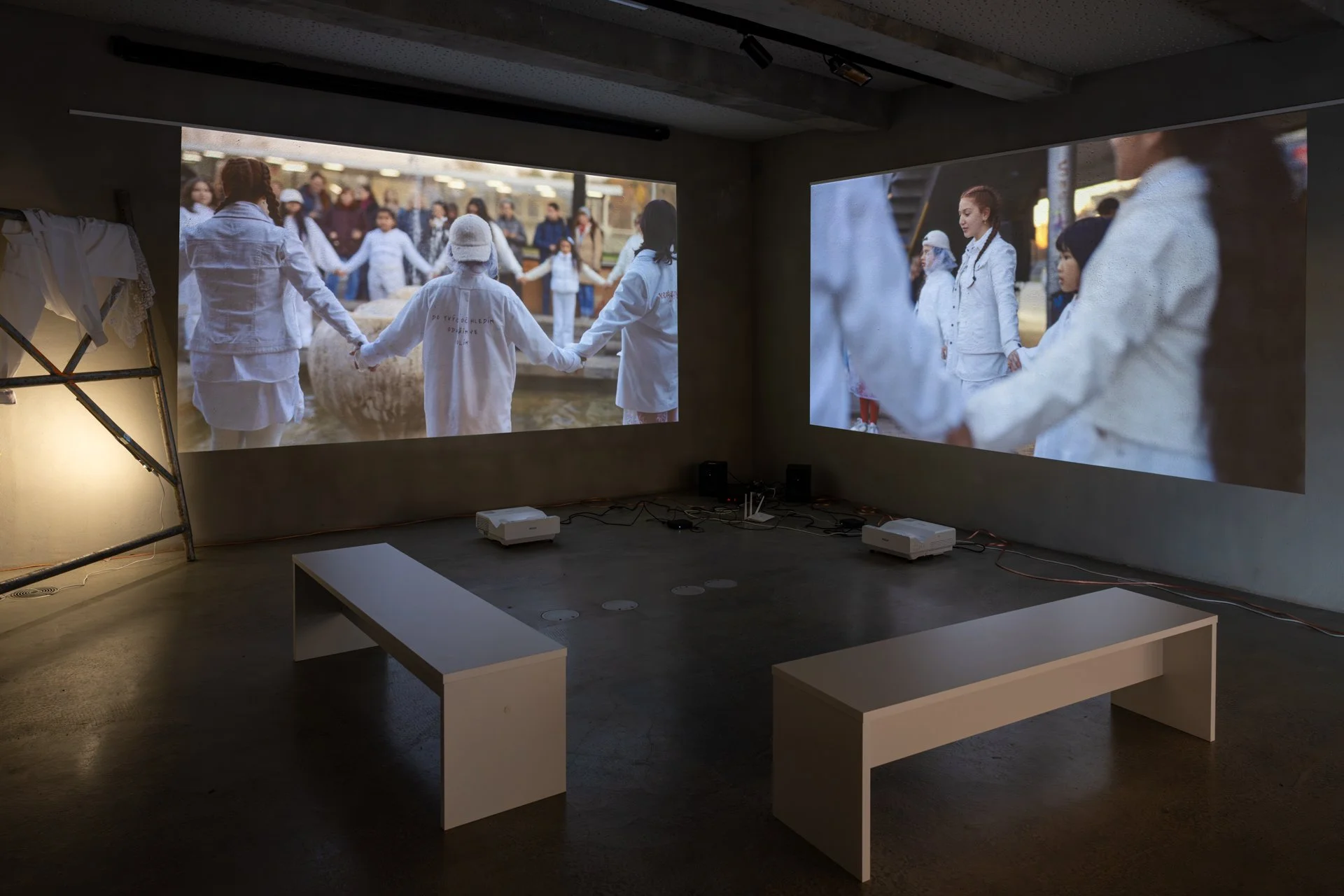
The artistic gesture here does not intervene as an aestheticizing act, but as a deliberate disruption of this state, as an attempt to temporarily disturb it and redirect attention to what is normally overlooked. The happening took place in three days, and it was based on elementary actions whose meaning was established through their focused execution. THE MAY QUEENS first entered the space as attentive participants, purifying the water body associated with the sculptural motif of a bud, and turning it into an imaginary well. This act was not a gesture of modification, but rather a way to reactivate a relationship with a place otherwise intended for a quick walk-through. The flowers were then tied to bouquets and given to people passing by. This created situations in which the gift was stripped of any expectation of a payback. It was a one-sided, unobtrusive gesture of kindness that disrupted the everyday routine. Here, THE MAY QUEENS didn’t act as performers of a fixed script, but as bearers of a certain sensitivity that also affected the surroundings. The happening peaked with a procession in which movement became the bearer of shared attention and temporarily rearranged the rhythm of the space. The break at the well was an opportunity to slow down; the movement turned into a shared presence. THE MAY QUEENS figuratively opened it up and, reciting an incantation, they established it as a quiet intervention of the personal plane into the shared act.
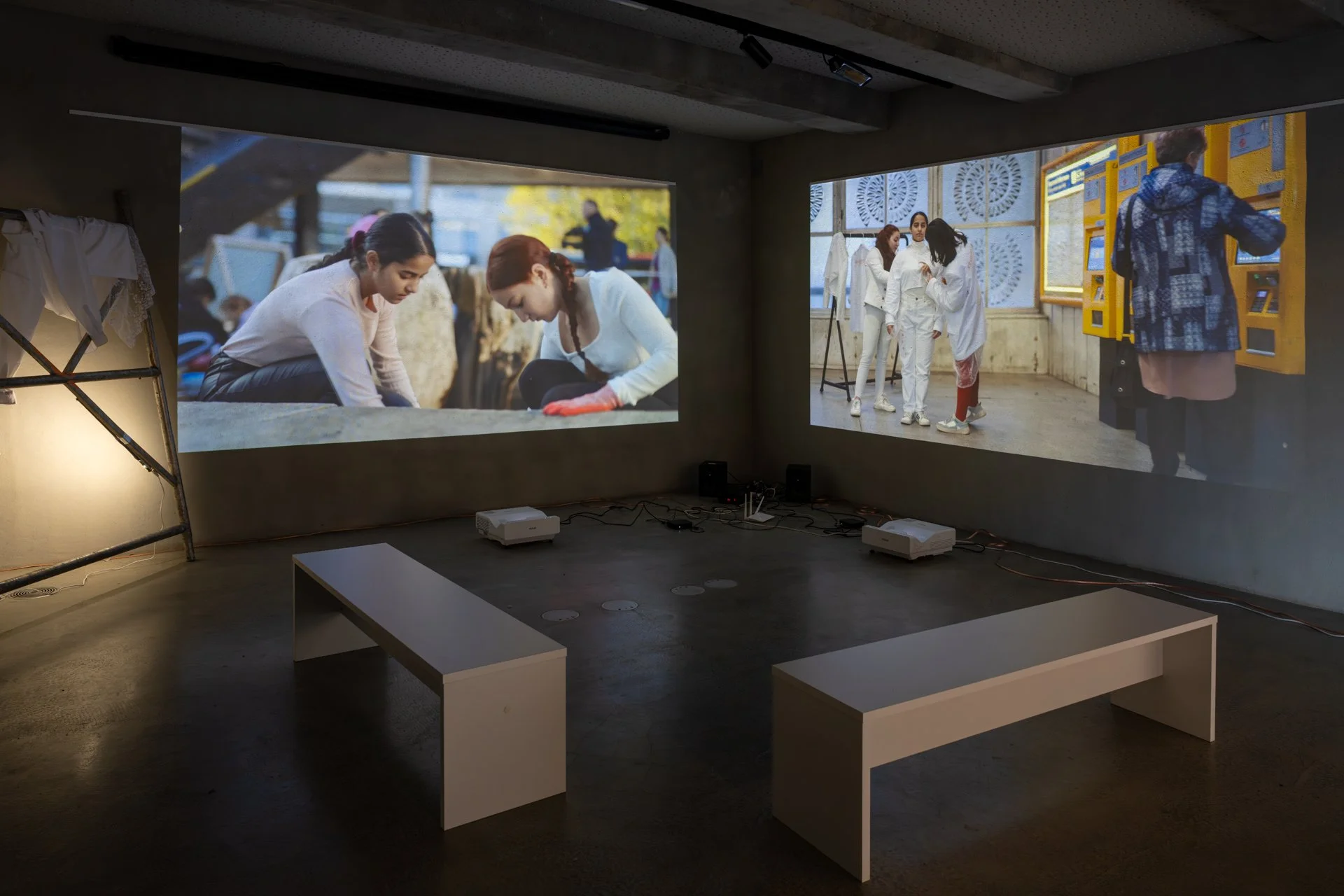
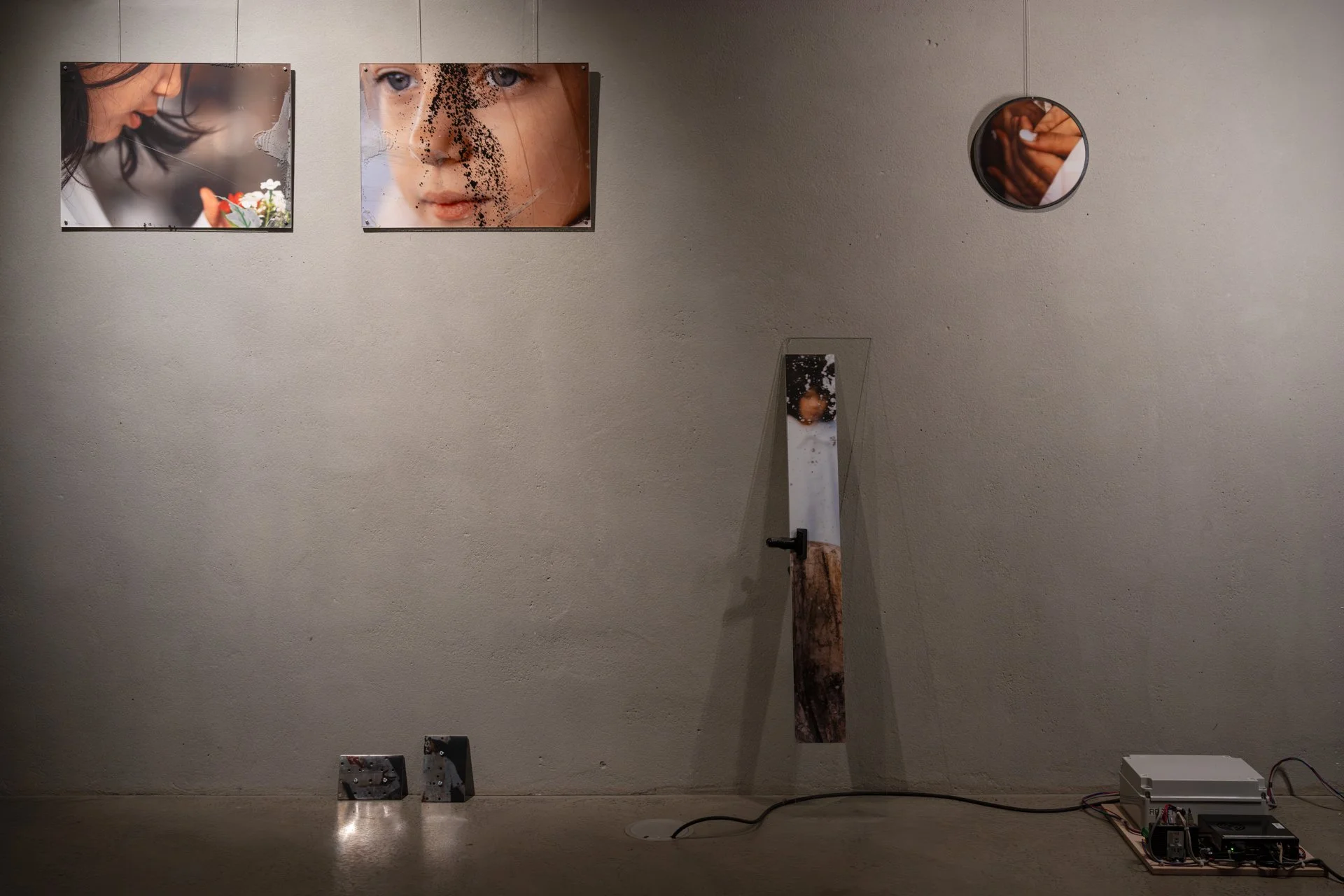
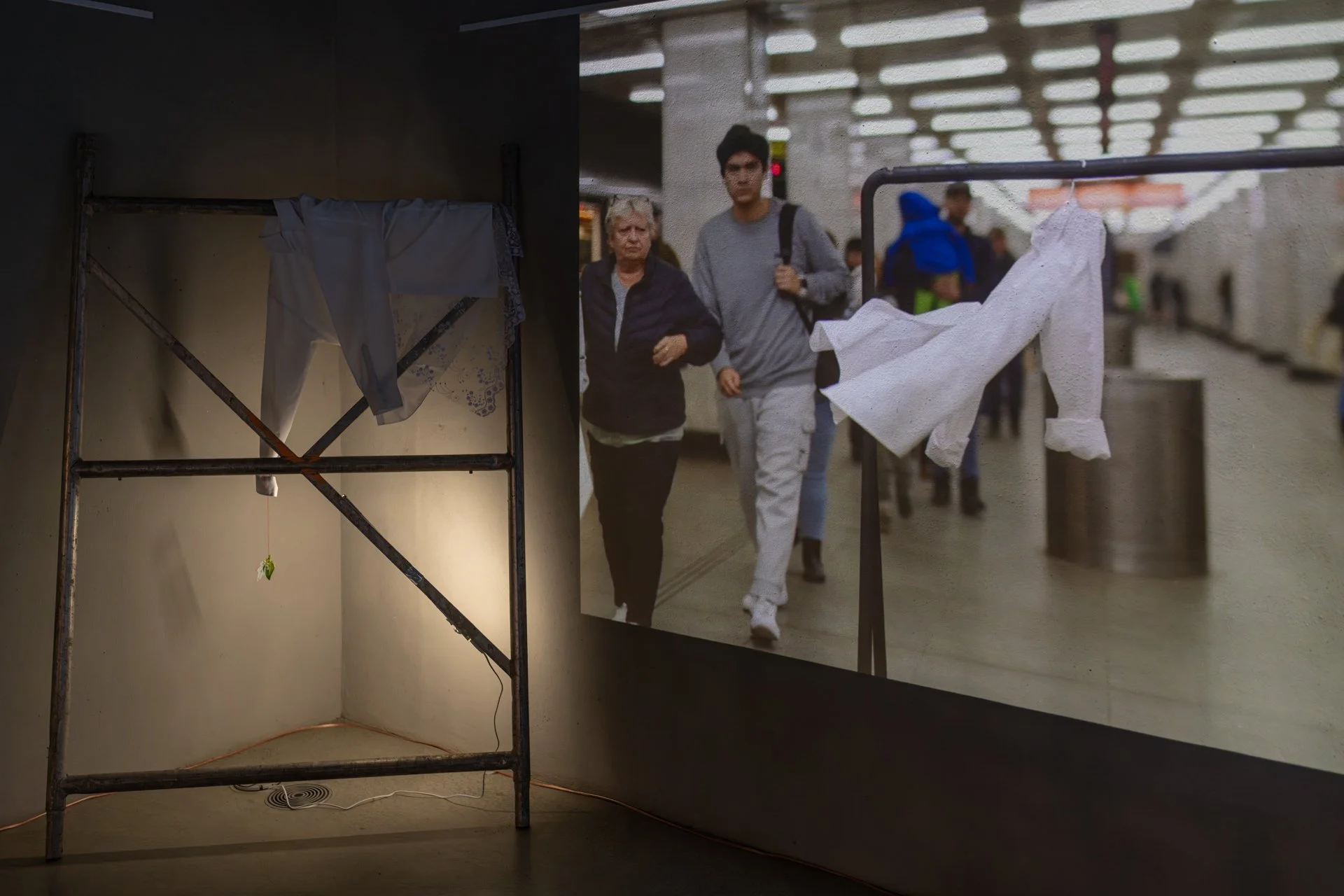
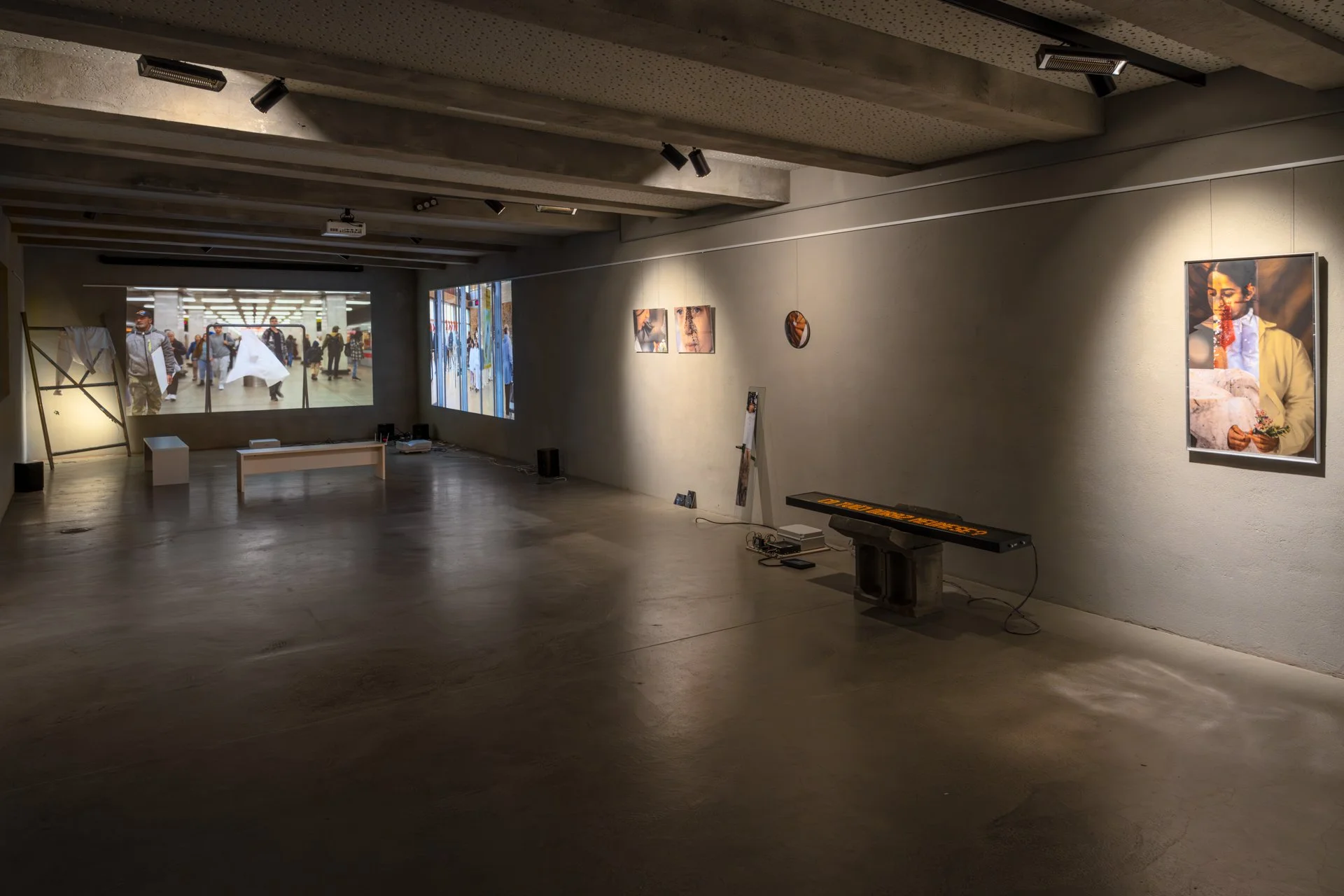
THE MAY QUEENS exhibition isn’t merely a documentation of a past event; it’s the next, reflective phase. Here, the performative act is translated into a space of representation, in which the individual layers of the project — visual, auditory, textual, and conceptual — are reorganized and become accessible to new perspectives of interpretation. The viewer is confronted with a complex field of meanings, oscillating between tradition and the present, between individual perception and collective memory, between everyday life and its symbolic transcendence.
The exhibition presents a conceptually sound expansion of the eponymous happening, which took place in the autumn of 2024 in cooperation with the Prague City Gallery and the Prague Public Transport Company at the Kačerov underground station. An important part of the project is its social aspect, specifically the involvement of non-professional performers. This element is an integral part of the artistic strategy, which emphasizes questions of authenticity, participation, and shared experience. The project thus oscillates between the aesthetic and social approach, without reducing one in favor of the other.
Kristýna Hájková
„A work of art isn’t a mirror of the world but the beginning of the new visibility.” ― Maurice Merleau-Ponty
Public space isn’t a neutral area. Beneath its surface, there are layers of rules that quietly organize our behavior and determine where we walk, where we stop, and what roles we accept. We adapt to these rules so fully that we cease to notice them. Yet something tragic unfolds in this process: our existence is reduced to the mechanical processing of stimuli, and the world around us gradually falls silent. Sociologist Hartmut Rosa describes these conditions as a crisis of resonance – the world speaks to us no more, since we’ve lost the ability to hear. And it’s precisely in this numbing silence where I see opportunities for art. Not as a decoration of life, but as a tool of imaginative archaeology that disrupts the stereotypical rhythm of everyday life and reveals its hidden layers.
For me, artistic intervention is a way to create a small crack in the infrastructure of reality. In this fissure, a specific type of attention may emerge, called “the act of aesthetic thinking” by Ludvík Hlaváček. The key isn’t in the search for beauty, but in a specific type of recognition that teaches us to accept the ineffable as a fundamental quality of the world that transcends us. This is also the reason why I’m so fond of working with non-professional performers. I’m not interested in perfect acting; what attracts me is the presence of a person who enters the situation with all their vulnerability and authenticity.
Such a performer takes a peculiar position: they are no longer just an ordinary passerby, yet they are not yet a “role-player” in the traditional sense. They move somewhere in between. And it is precisely in this limbo where a fundamental moment arises for me. The moment when someone else steps out of automatism, and in the reflection of the fact, we find out that we could do the same. We realize that the rules of the situation are not set in stone, and that beneath the weight of daily obligations there’s a broad reservoir of unrealized forms of ourselves.
Jakub Jahn
Author | Jakub Jahn
Production | Art for the City / Marie Foltýnová, Rebeka Provazníková, Agáta Hošnová
Music | Amelie Siba
Incantation Text and Lettering | Michaela Fenkl
Photography | Jean-Claude Etegnot
Cinematography | David Markovič
Choreography | Andrea Benková
Costume Design | Kristýna Tulachová & 1981 Secondhand
Architectural Collaboration | Natálie Najbrtová
Educational Collaboration | Markéta Pompová, Kristýna Gorolová
Supervision for Prague Public Transit Company | Anna Švarc
KRÁLOVNIČKY
Alena Harangová
Allison Valentina Fabiánová
Anastazia Sabadyth
Anna Oláchová
Denisa Lakatošová
Dominika Makulová
Jolana Gorolová
Karolína Oláchová
Michaela Byče
Milana Mosentseva
Monika Ngoc Anh
Nella Marie Přikrylová
Sofie Batiová
Sofie Muchová
Tuyet Linh Nguyen
Veronika Nguyen
Yelyzaveta Danylyshyn
Žaneta Lakatošová