Josef Toufar & Jan Palach Memorial
Tereza Štětinová
Borůvkovo Sanatorium, Praha
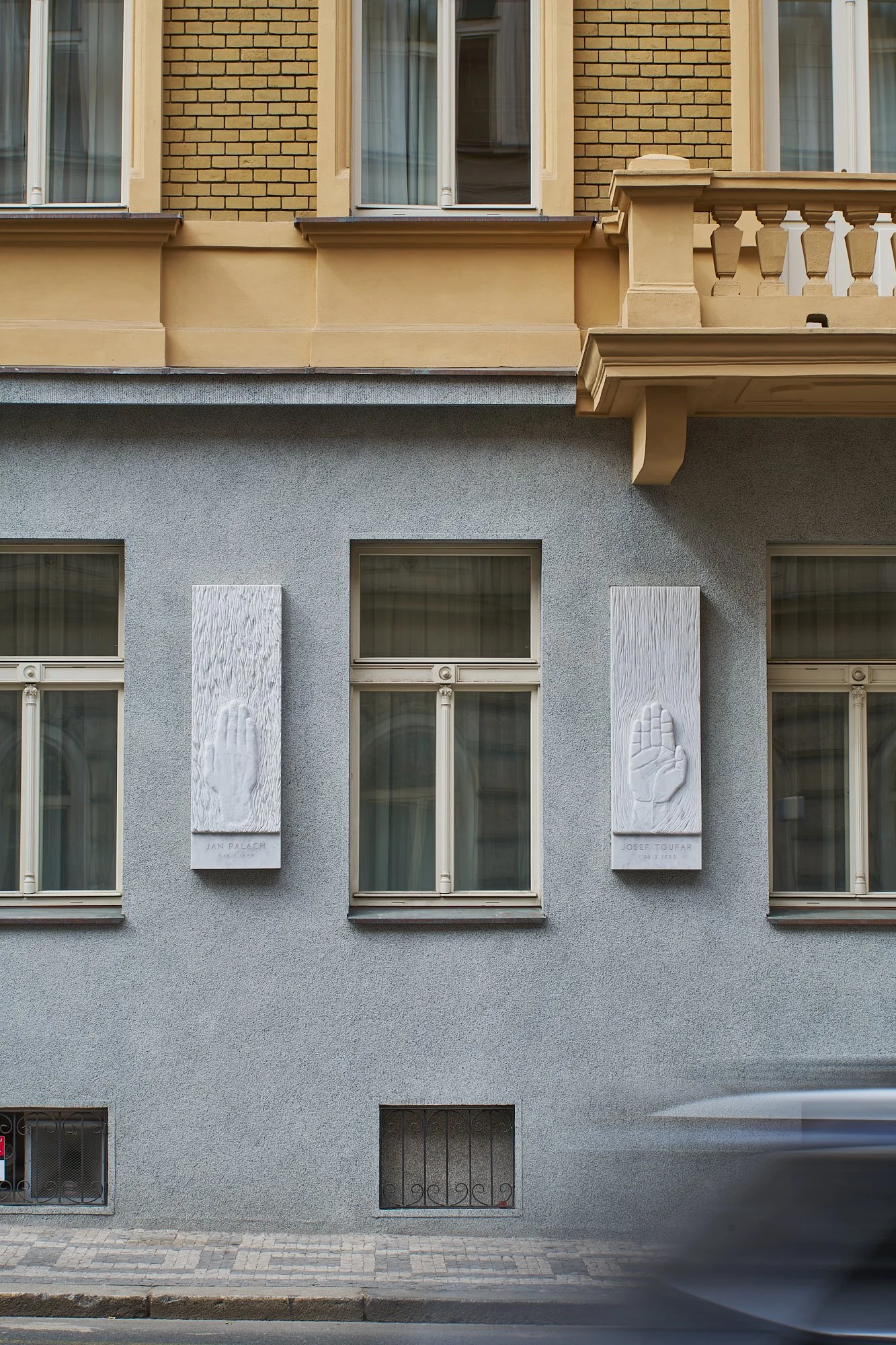
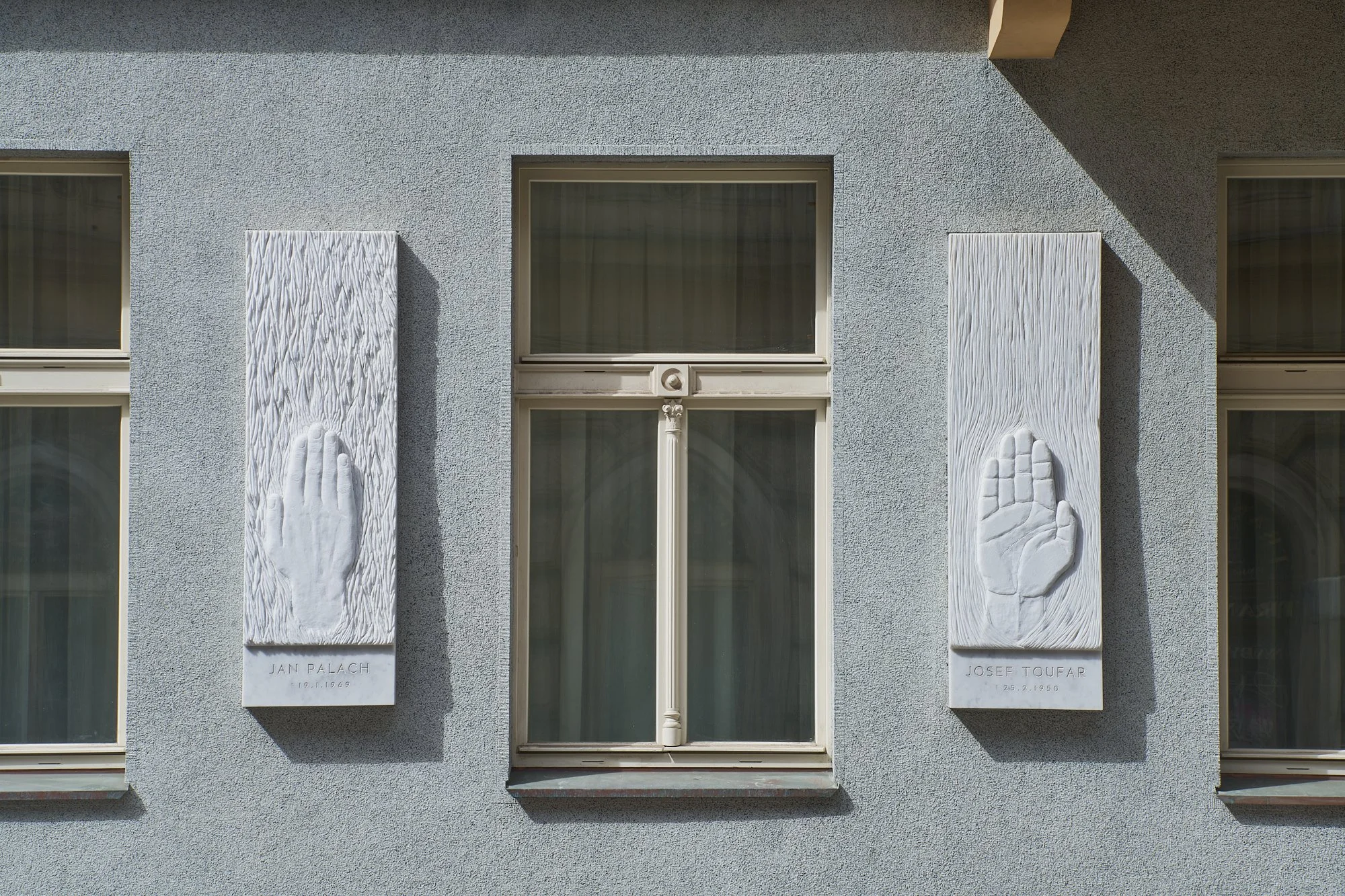
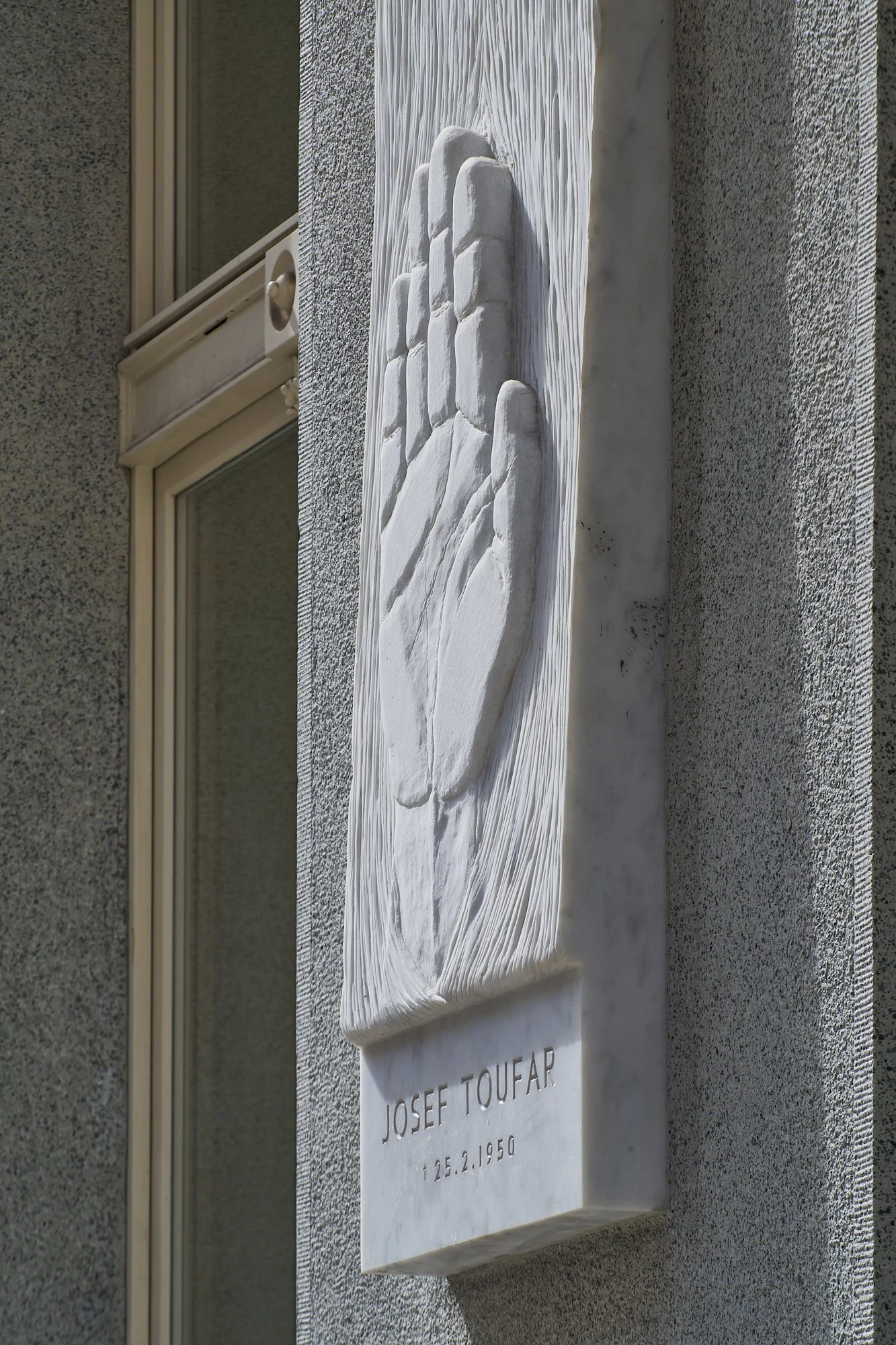
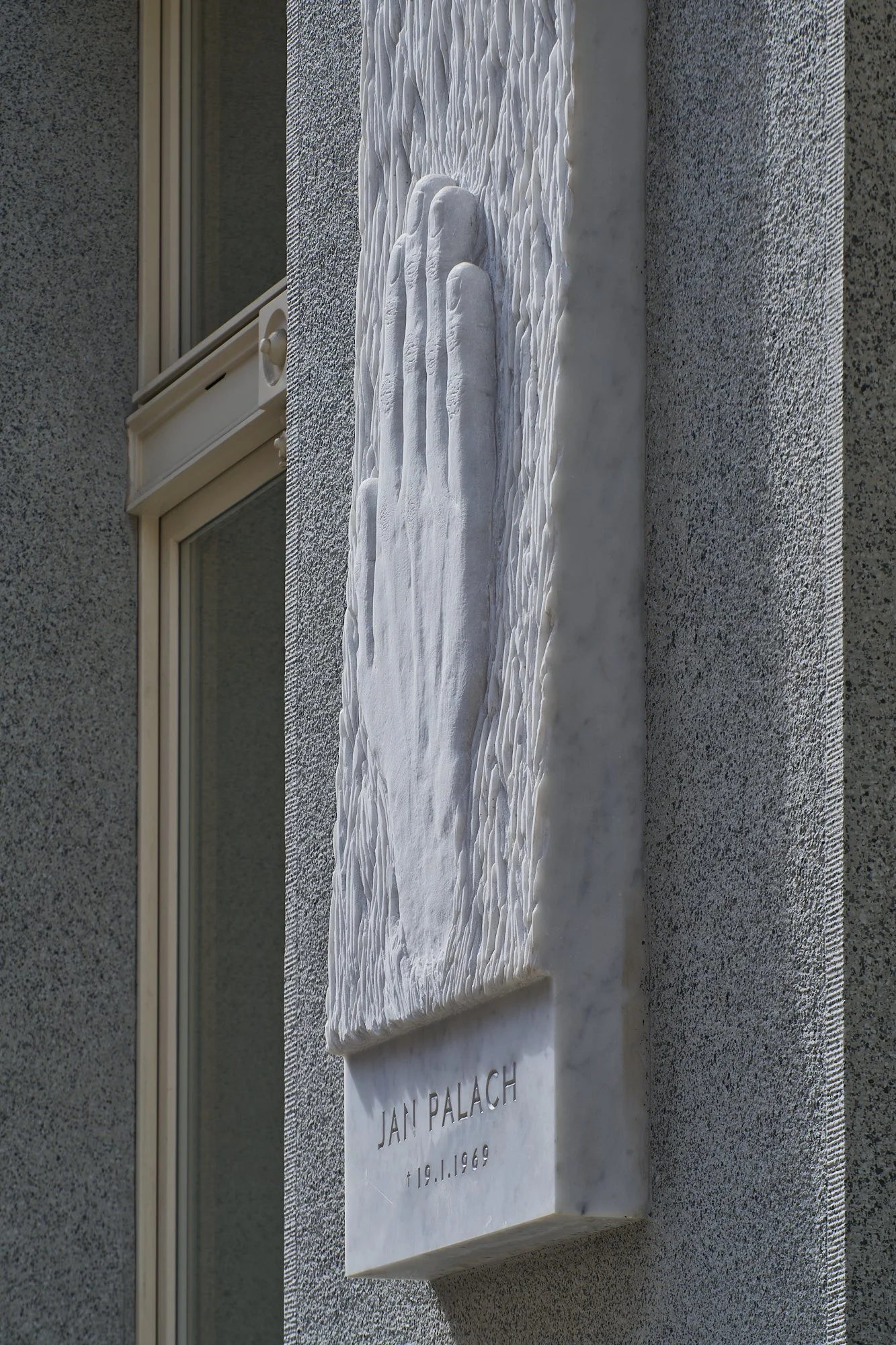
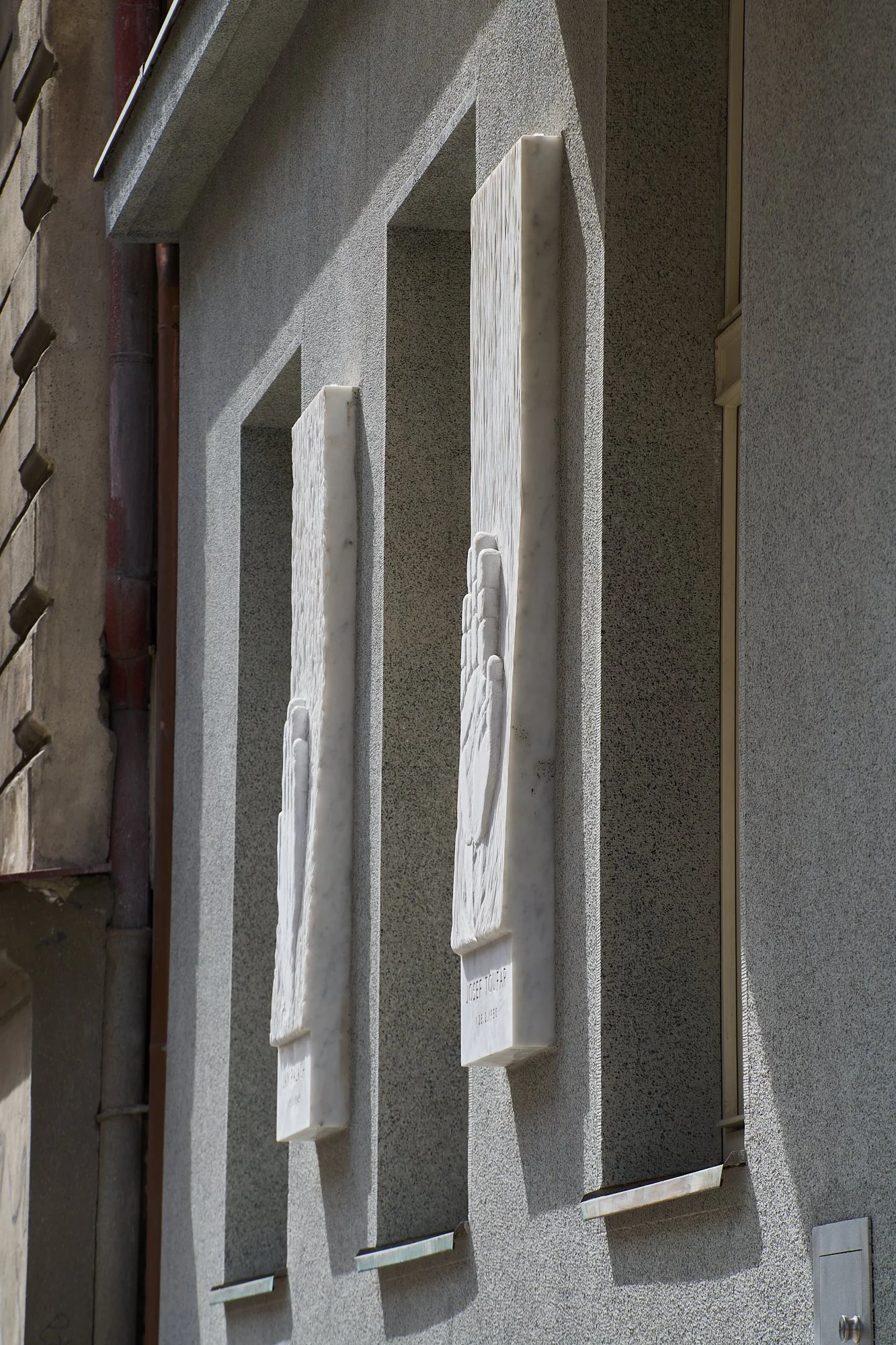
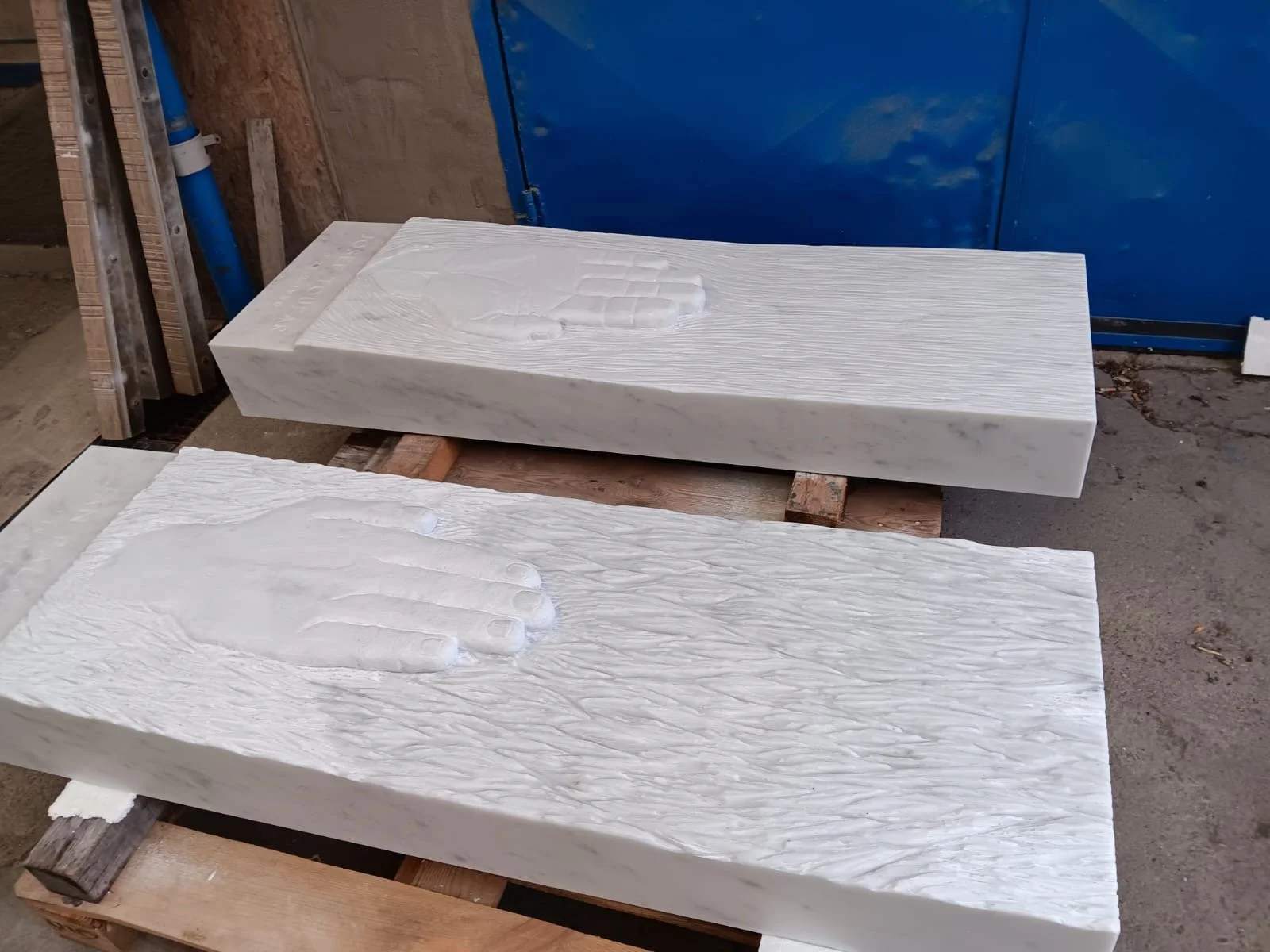
A pair of marble reliefs pays tribute to two remarkable figures in Czech history—Jan Palach and Josef Toufar. Each became a symbol of resolve, sacrifice, and an uncompromising stance against oppression. The central motif of both works is the gesture of the hand, which captures the force of their decisions.
Tereza Štětinová
The memorial reliefs dedicated to Josef Toufar and Jan Palach, installed in 2023 through a collaboration between the municipal district of Prague 2 and a private owner of the former sanatorium building, offer a compelling point of departure for reflecting on contemporary modes of commemorative practice. The project exemplifies a convergence of civic, institutional, and private interests in the construction and preservation of cultural memory, foregrounding the increasingly hybrid nature of memory-making in the public sphere.
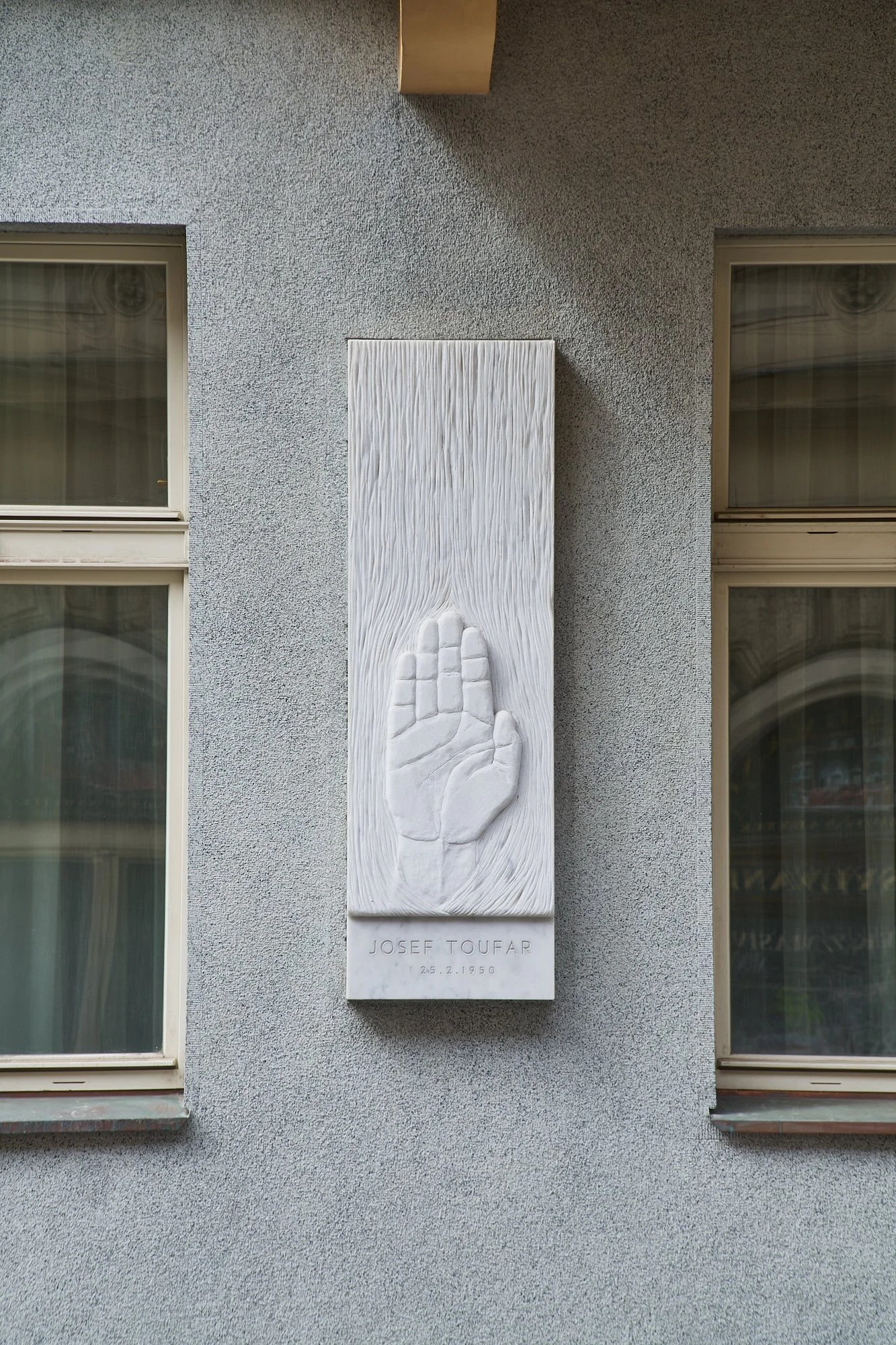
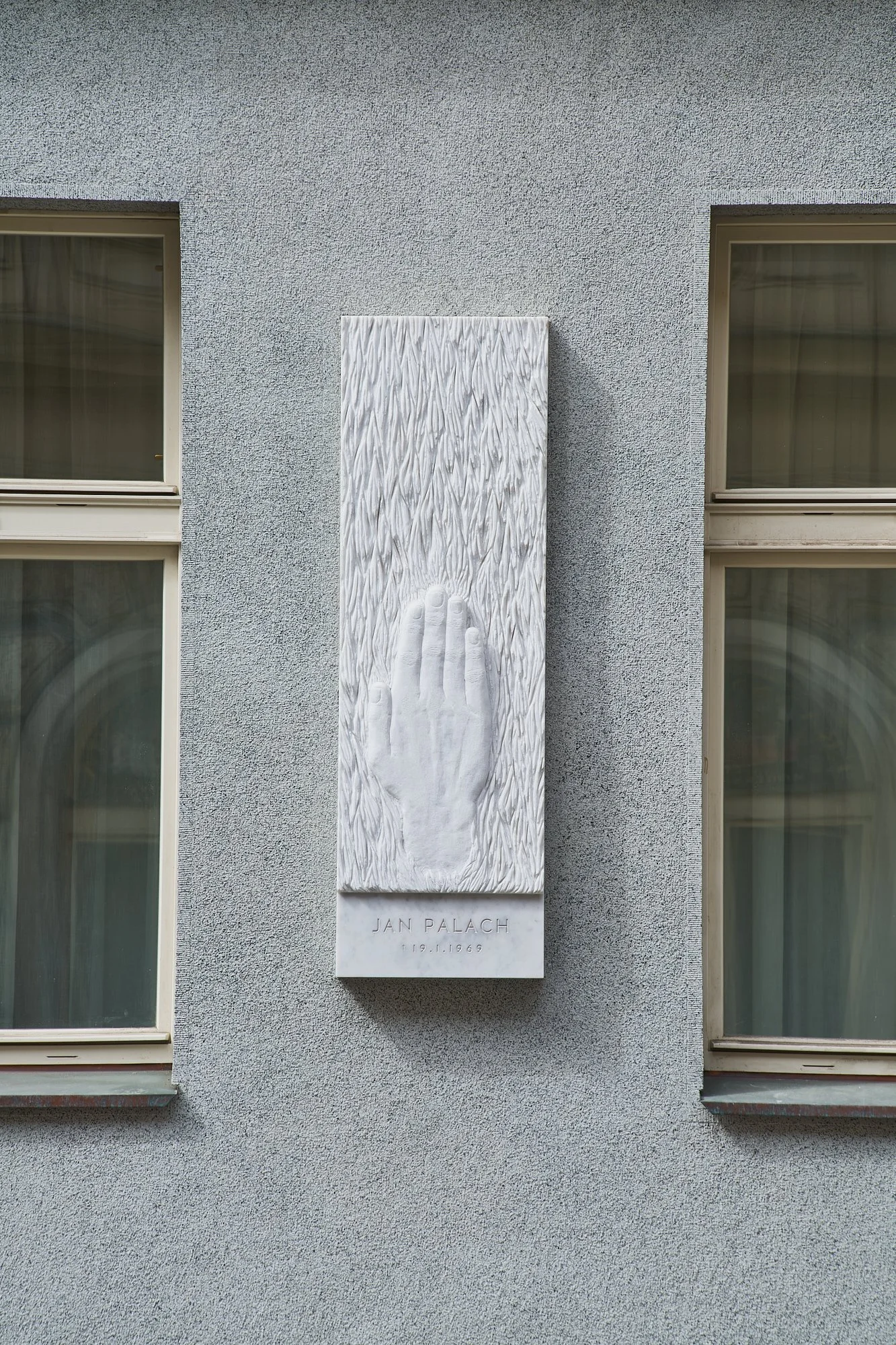
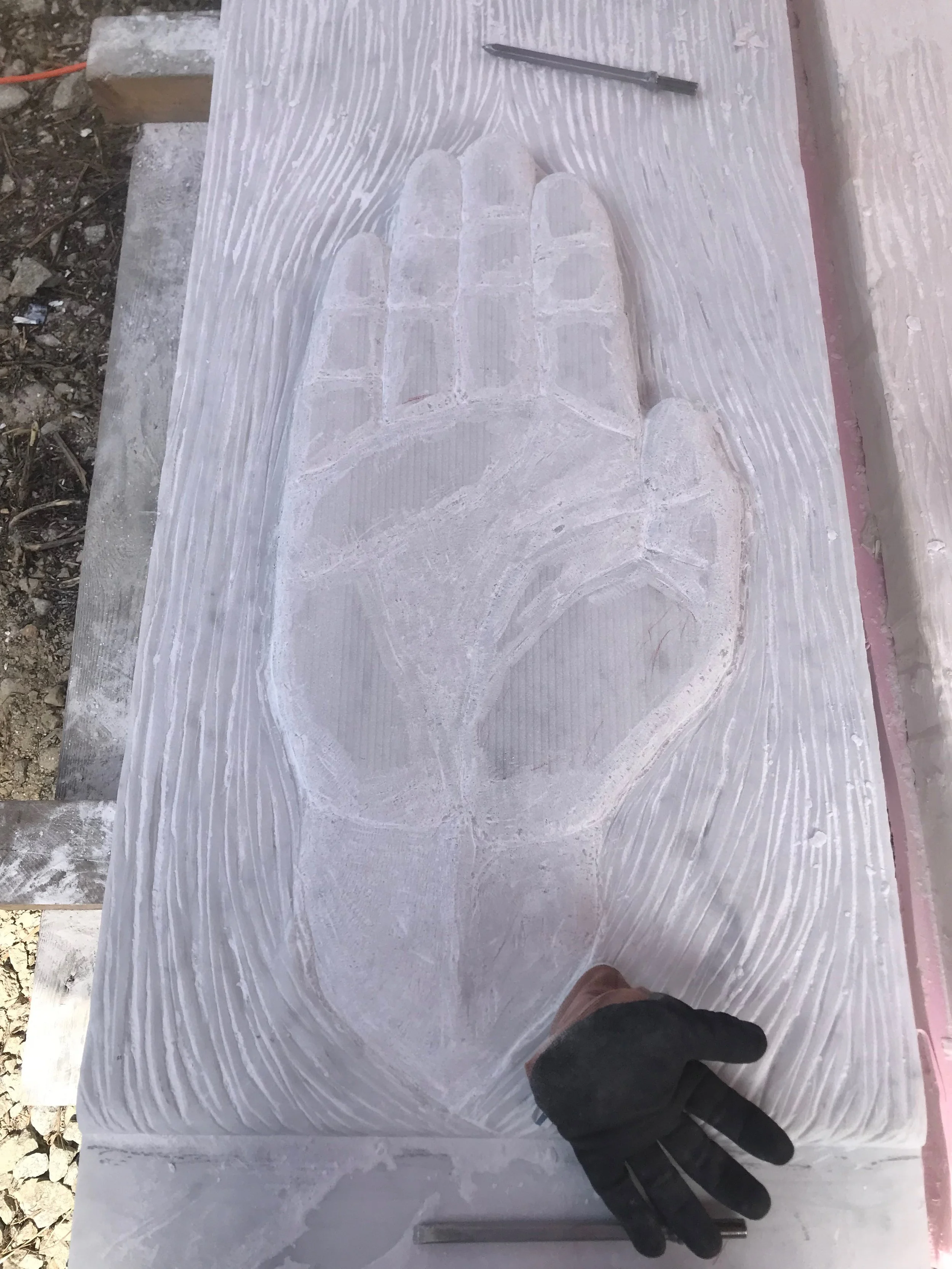
Materially, the work is marked by a deliberate austerity: its raw, unembellished surface corresponds both to the architectural environment and to the gravity of its subject matter. Rather than presenting full figural representations, the reliefs depict only hands, thereby eschewing traditional modes of heroic monumentalisation. This formal restraint is crucial. The work does not aspire to monumentality in the conventional sense; instead, it articulates an intimate, almost tactile gesture. One hand is open, its palm extended in a quiet, benedictory motion; the other is turned outward, tense and resistant, its gesture suggestive of defiance. In this way, the symbolic language of the work operates on the level of universal human experience, rather than being confined to a narrowly national narrative.
In her approach, Tereza Štětinová situates herself within the trajectory of contemporary conceptual sculpture, wherein the human body is not represented as a unified whole but rather as fragment, trace, or sign. The gestures of the hands function not merely as anthropological motifs but as encoded carriers of memory. Visually, they evoke elements of Christian iconography—most notably in the blessing gesture associated with Toufar, which gestures toward the spiritual dimension of his suffering. By contrast, Palach’s hand appears secular, defensive, and potentially admonitory: a gesture that might be read as articulating a resolute “enough.” Together, these contrasting positions generate a productive tension between patient endurance and radical action.
Ultimately, Štětinová’s work transcends the role of a simple commemorative marker for two historical figures. It articulates a broader and more urgent question: how do we remember today? What forms, materials, and gestures are mobilised when we seek to inscribe the past within the present? These reliefs constitute a modest yet remarkably potent example of how contemporary art can enter the space of collective memory without recourse to pathos, instead cultivating a profound attentiveness to silence, gesture, and corporeality.
Expert Consultant | Martin Žák, sculptor
Assistants | Roman Štětina, Miroslav Příhoda, Tomáš Nisser
Stonework and Letter Carving | Martin Foit – Kamenictví Foit
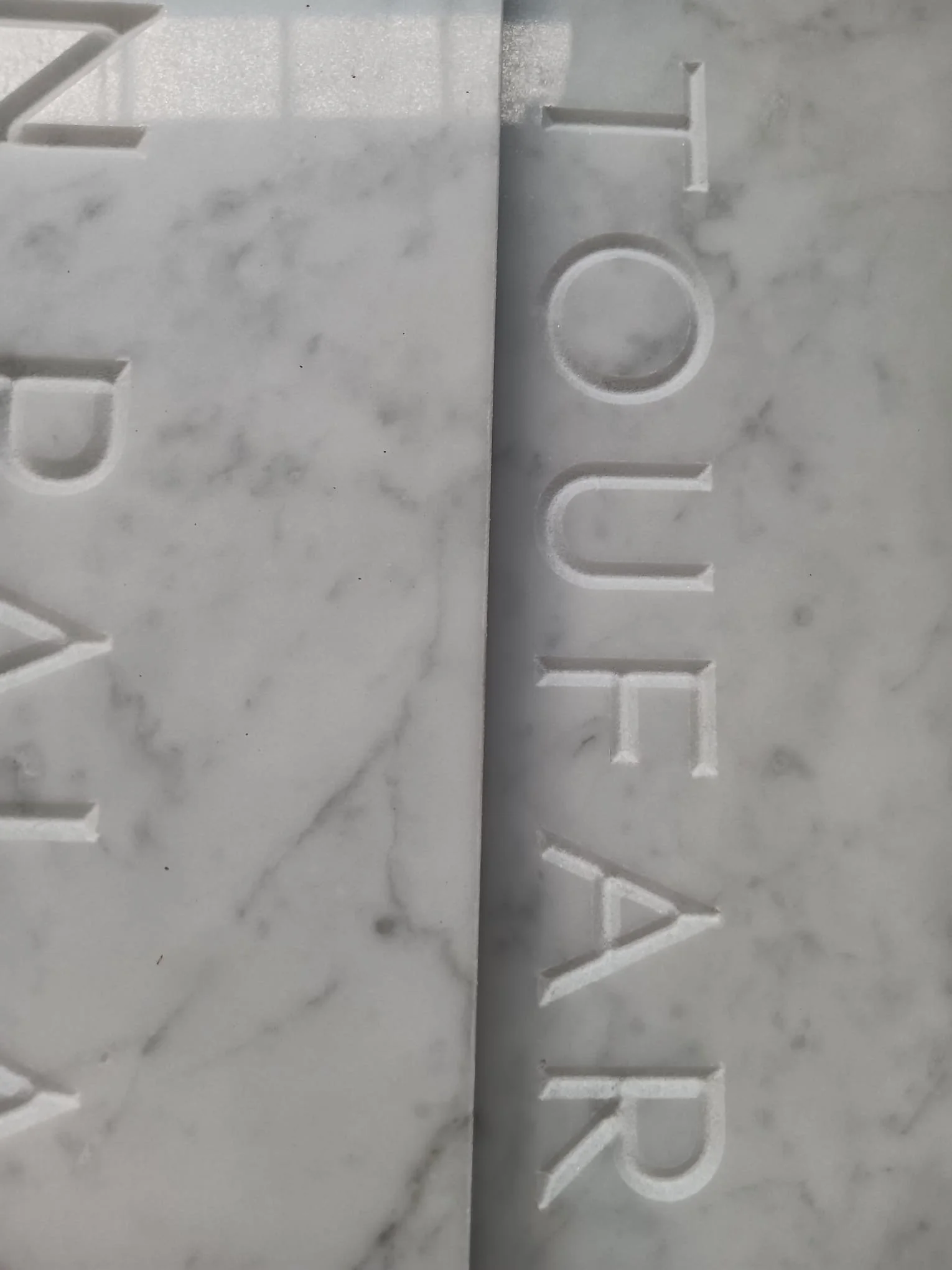
Typeface Designer | Nikola Wilde
The alphabet was created specifically for this project, drawing on letterforms found on gravestones from the late 1940s and early 1950s.